Net zero dispute splits parties on A$500 million Vanuatu agreement
Coalition committee members want the climate clause changed or its legal implications clarified, but their opposition cannot block ratification.
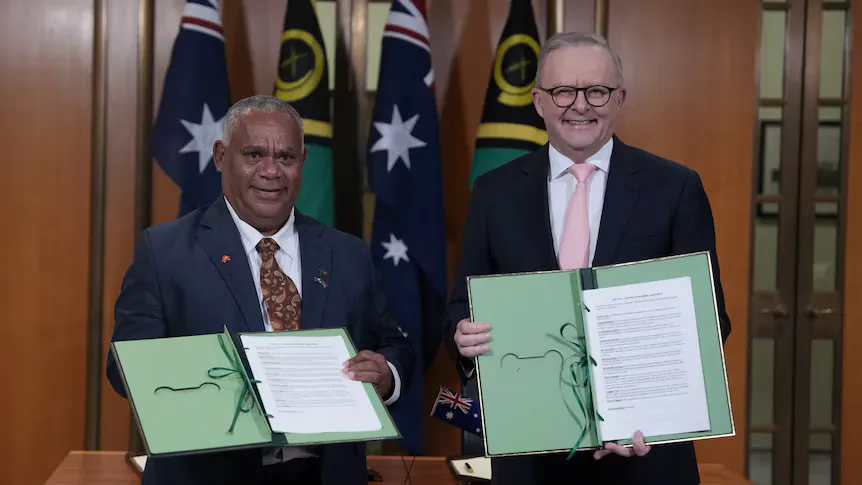
An Australian security pact worth A$500 million with Vanuatu has lost Coalition backing because of its commitment to net zero by 2050, drawing criticism from Foreign Minister Penny Wong.
Coalition members lodged a dissenting report after a parliamentary committee examining the Nakamal Agreement recommended ratification. The government can proceed without parliament's approval, and the committee cannot bind its decision.
The disputed clause describes climate change as an existential threat. It commits Australia and Vanuatu to moving their economies to net zero by 2050 while meeting each country's renewable energy targets.
Having pledged to abandon net zero in government, the Coalition argues the provision would unfairly restrict future governments' choices on energy and climate policy. Its committee members also warned that a breach could invalidate other parts of the treaty, including security provisions they regard as essential.
The Coalition members called for the climate section to be amended. Alternatively, they sought a national interest analysis setting out the legal consequences if a future government altered or repealed net zero policy.
Wong accused the Coalition of allowing ideology to take precedence over national security. The government regards the agreement as central to strengthening Australia's regional standing and preventing a Chinese military foothold in the Pacific.
Other Pacific agreements, including those with Tuvalu, Nauru and Papua New Guinea, have received bipartisan support. The government fears the division over Vanuatu could weaken Australia's strategic position in the region.