Snowy 2.0 cost could reach A$25 billion as completion slips to 2029
Snowy Hydro has set a target cost of A$22 billion, with provision for another A$3 billion if needed.
Snowy Hydro’s latest reassessment puts the potential cost of Snowy 2.0 at A$25 billion, with full operation now expected in 2029. The Commonwealth-owned company expects initial electricity generation in early 2029, followed by full operation later that year.
The previous estimate was A$12 billion, with generation due to begin in late 2027 and full operation expected a year afterwards. The pumped hydro project originally had a A$2 billion budget and was scheduled to begin operating in 2021.
Chief executive Dennis Barnes said incomplete design work before the 2023 reset had contributed to the higher costs. He said labour accounted for 80 per cent of project costs, with 5,000 people now working on construction and more staff needed for longer than previously anticipated.
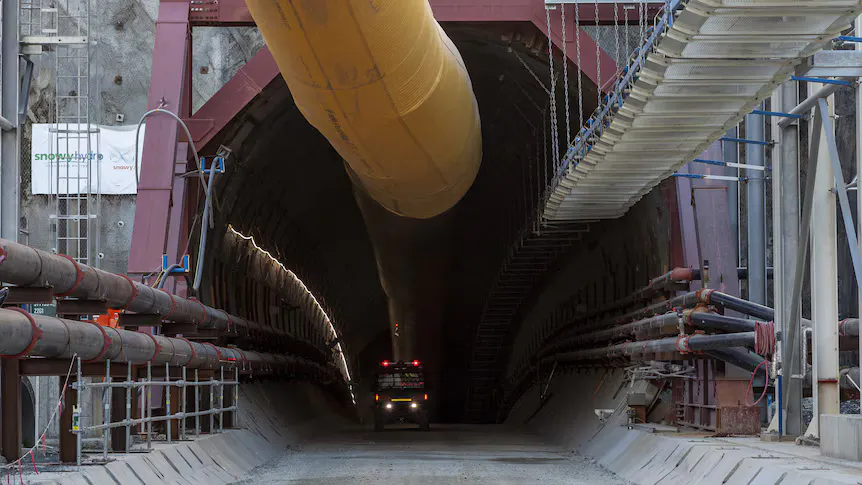
The reassessment found machine tunnelling was 65 per cent complete, while cavern excavation had reached 90 per cent. Construction of the underground power station had also begun. Barnes said recent milestones were being met, but could not exclude further cost increases.
Located in the New South Wales Snowy Mountains, Snowy 2.0 will connect two dams through roughly 27 kilometres of tunnels. The 2,200 MW project is designed to store energy by pumping water uphill when electricity is cheap, then releasing it to generate power during periods of high demand.
Snowy Hydro also published a GHD economic study forecasting an A$18 billion contribution to the Australian economy during construction and a reduction of more than A$7 billion in wholesale electricity costs by 2075.
Energy Minister Chris Bowen and Finance Minister Katy Gallagher said abandoning the project would threaten grid reliability, eliminate 5,000 jobs and increase electricity bills. Shadow Energy Minister Dan Tehan called for Bowen’s resignation over the rising costs, but did not clarify whether the Coalition supported continuing the project.