Methane detections at Gorgon trigger UN alert and WA investigation
Five satellite observations identified plumes at Chevron’s LNG facility, with the latest recording emissions averaging about 7.8 tonnes an hour.
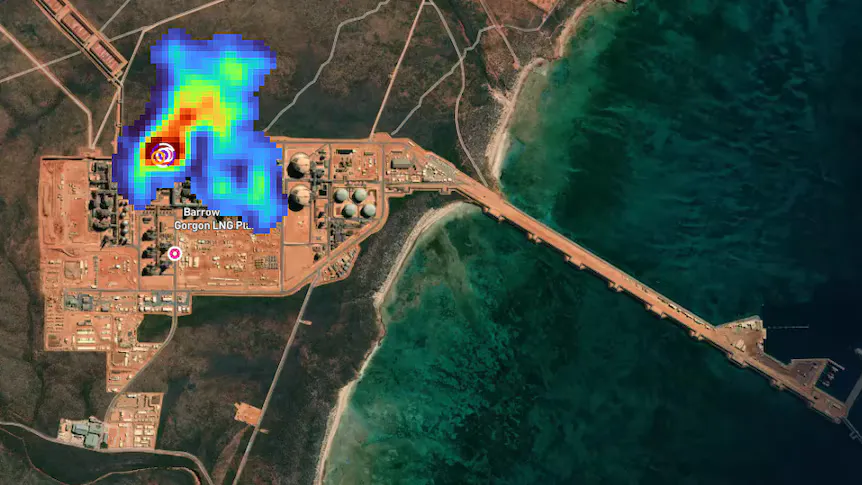
Repeated methane detections above Chevron’s Gorgon LNG facility have led to a United Nations alert to the company and an investigation by WA environmental authorities into whether regulatory action is needed.
Tanager-1 identified plumes during five successive satellite passes over the plant, located on Barrow Island near WA’s Pilbara coast. Its most recent reading, taken in late August, put the average methane emission rate at about 7.8 tonnes an hour.
Chevron said it had received the warning and was working with the UN Environmental Programme (UNEP). It also raised concerns about uncertainty in satellite monitoring and said it wanted more clarity about the measurements.
UNEP said formal feedback had not arrived from Chevron or the Australian government. A spokesperson said the agency would revise its public data after receiving that feedback. An earlier methane notification was sent to Chevron in July 2025.
The WA government said its responsibility for managing the potential leak was unclear. The Department of Water and Environmental Regulation is assessing the reports and possible compliance measures. Gorgon’s federal approval does not cover methane.
Louis Goddard, research head at climate investigative firm Data Desk, said the consistent readings pointed to a possible operational issue. His team located the apparent source at or near equipment used to remove impurities from natural gas.
Questions about the cause and whether the emissions had ceased went unanswered by Chevron. Bruce Norris, chemical engineering program chair at the University of Western Australia, said measurements nearer the plant were necessary.